Research / Fiber photometry

Connect signals
with the eventsyou study.

Build a workflow for reference correction, normalization, and event-aligned analysis—with the method choices and trial exclusions available for review.

Paired signals, experimental events and trial comparisonsSignal and reference channels connect to experimental event timing and event-aligned trial views.PAIRED CHANNELSSignalReferenceSHARED TIMEBASE01RecordingEXPERIMENTAL EVENTSCueActionOutcome02EventsEVENT-ALIGNED TRIALSEventTime →03Comparison

Before the analysis

Keep the acquisition
with the signal.

Connect the detector and optical setup, indicator, signal and reference channels, sampling and event timing to the recording your team is analyzing.

  • Detector & optical setup
  • Signal & reference channels
  • Sampling & event timing
See how the setup stays connected

Our approach

From continuous recording
to meaningful comparison.

Choose correction, normalization and event windows around your indicator and experiment. Keep those choices explicit as researchers review signals, trial inclusion and interpretation.

01 / Channels

Start with the channels.

Keep the measured signal, reference strategy and acquisition timing together. Align channel timestamps before comparing or correcting the recording.

Channel identity · Acquisition settings · Time alignment

Inside the method
Analysis method
In the public example below, the 470 nm input and 415 nm reference are aligned by linear interpolation. Channel roles and indicator identity still need to be established for each preparation.
A source recording connects signal and reference channels on a shared timeline.AcquisitionSignal channelReference channelAligned timestamps
Signal, reference, and event timestamps belong to the same recording.

02 / Processing

Make the processing explicit.

Address drift, evaluate the reference contribution and retain the processing choices behind the derived signal.

Baseline method · Correction fit · Normalization window

Inside the method
Analysis method
The recorded example uses airPLS detrending, robust control-channel regression with a soft-L1 loss, and z-score normalization. These are recorded method choices, not a universal recipe for every indicator.
The source channels lead to baseline estimation, reference correction and normalization.Recording + baselineDerived signalairPLSReference fitNormalization
Baseline, reference correction and normalization remain explicit choices.

03 / Events

Put events on the same timeline.

Connect the time series to experimental events, then inspect the individual trials behind a comparison. Keep event definitions and analysis windows visible.

Event definitions · Baseline interval · Trial inclusion

Inside the method
Analysis method
Align trials to recorded events so researchers can compare activity before, during, and after the event of interest.
Event markers on the source recording connect to three trial views aligned at time zero.Defined event windows0Time from event
Defined event windows organize individual trials for review.

04 / Review

Keep the judgment with the result.

Review signal quality, trial inclusion, and method choices. Keep source references and processing parameters with the figures and tables so another researcher can examine the analysis.

Review rationale · Processing settings · Source-linked exports

Inside the method
Analysis method
The public processing package includes aligned channels, a corrected trace, event-aligned traces, summary tables and provenance. Delivery of these artifacts is distinct from scientific acceptance.
Source channels connect through recorded method choices to a review record and source-linked output sheets.Review recordSignal qualityTrial inclusionMethod choicesFigures + tablesLinked provenance
Review rationale stays connected to methods, figures and source.

One recording. An inspectable path. The method can evolve. The record explains how each output was produced.

Discuss your photometry workflow

From the platform

A recording you can inspect.
A method you can revisit.

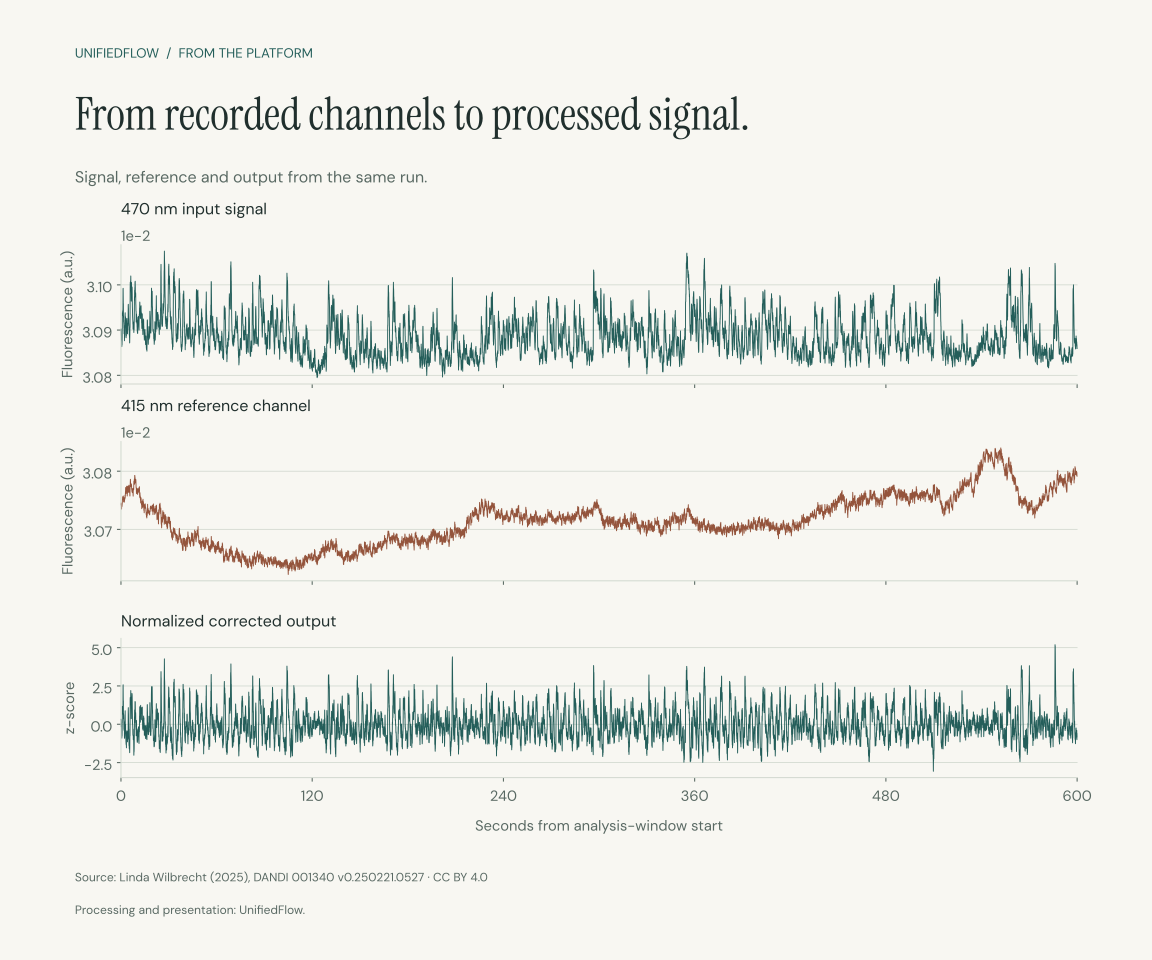
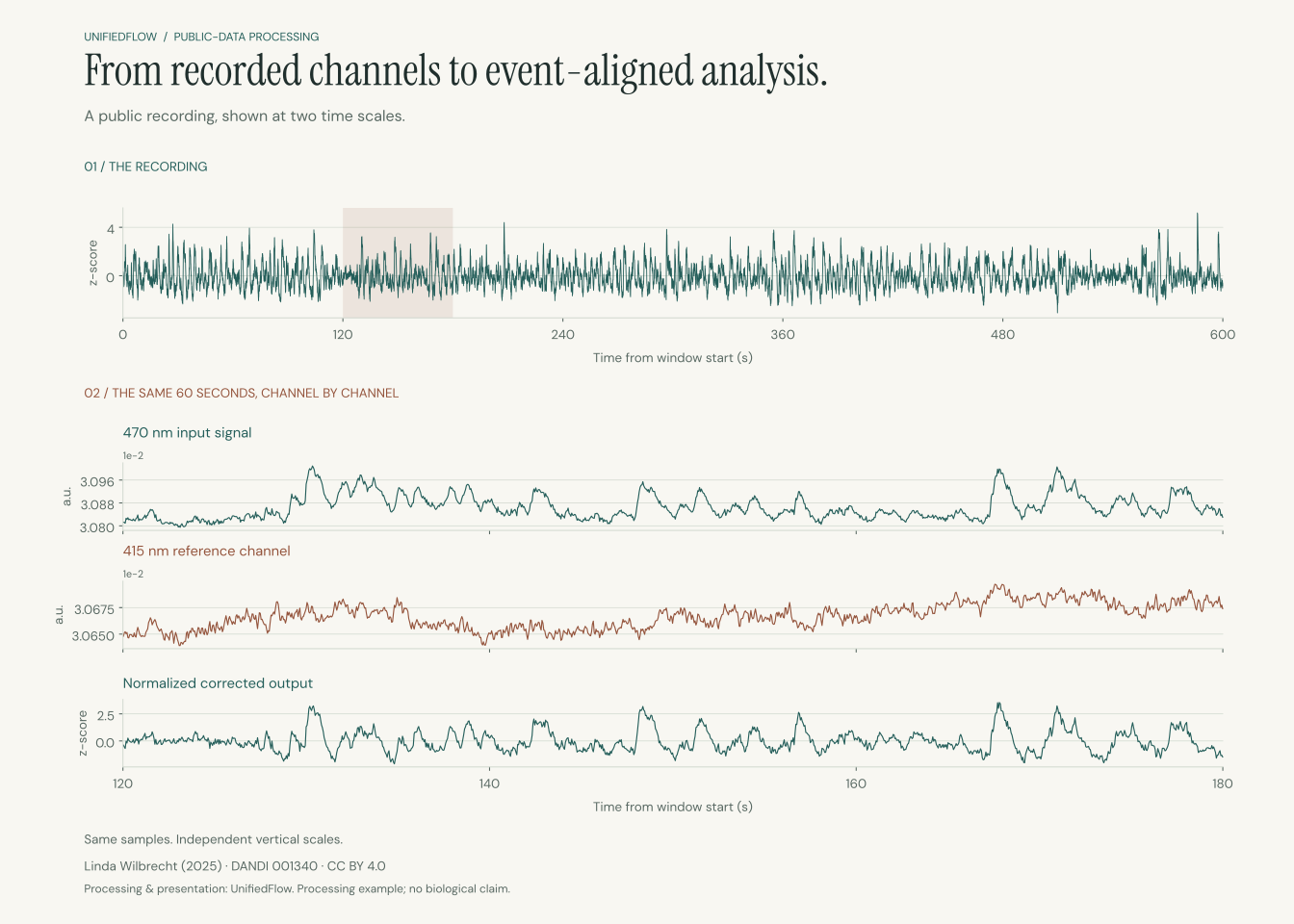
See a complete public recording window, then look closer at the input signal, reference channel and processed output from the same run.

Public photometry processing example: the complete 600-second normalized output above a 120–180 second detail of the aligned 470 nm input, 415 nm reference and normalized corrected output.
One recorded window, with signal, reference and processed output shown at a closer scale.Open full-size ↗
600 seconds12,216 recorded output samples
120–180 secondsThe same interval across all three detail panels
Recorded processingairPLS · robust reference fit · z-score
See signal, reference and output
470 nm signal, 415 nm reference and normalized corrected output from the same 600-second window.
Signal, reference and output from the same run.
Source & method notes

Source: Linda Wilbrecht (2025), DANDI 001340, version 0.250221.0527. CC BY 4.0. Recording BSD016 / p113; source time window 180.32–780.32 s. Processing and presentation adapted by UnifiedFlow; no endorsement implied.

Workflow: fiber_photometry.nwb.v1 v1.0.0. Method: airPLS detrending, robust reference correction, and z-score normalization v1.0.0. Processed 27 August 2026. The excerpt demonstrates processing mechanics, not a biological conclusion.

The source indicator metadata and selected processing profile differ (GCamp8f / dLight). This example therefore makes no claim about indicator identity or neurotransmitter activity. Those details must be resolved in scientific review before interpretation.

Research operations

Keep the signal connected to its setup.

Keep raw, reference and derived signals connected to event definitions, processing settings and review decisions. Establish a workflow your team can revisit as recordings, methods and people change.

A conversation, grounded in your work

Let’s connect the signal to your science.

Tell us about your recording setup, current analysis, and the comparison your lab needs to make.

Discuss your workflow